
How Often Should You Mow Your Lawn in Lubbock?
Lawn mowing frequency in Lubbock depends on how fast the grass grows during different seasons. Weather patterns, soil conditions, and grass type all affect mowing timing. Following the right schedule helps your lawn stay thick, green, and weed-resistant. Poor timing can stress turf and weaken roots over time.
Why Mowing Frequency Matters for Lawn Health
Mowing is not just about appearance. It directly affects turf density, root strength, and moisture retention. When grass is cut at the right interval, it grows thicker and develops deeper roots. This improves drought tolerance and naturally reduces weed growth.

Frequent mowing also helps maintain even sunlight distribution across grass blades. Consistent cutting prevents seed head formation and keeps the lawn looking uniform. Proper timing supports long-term lawn health and reduces maintenance problems.
Grass Types in Lubbock Affect How Often You Should Mow
Different grass types grow at different speeds throughout the year. Understanding your turf type helps you set the right mowing schedule and avoid unnecessary stress. Most lawns in Lubbock use warm-season grasses that thrive in hot, dry conditions.
Bermuda Grass
Bermuda grass is the most common lawn grass in Lubbock because it tolerates heat and drought well. It grows aggressively during late spring and summer when temperatures are high. This rapid growth means lawns usually need mowing every 5 to 7 days during peak season.
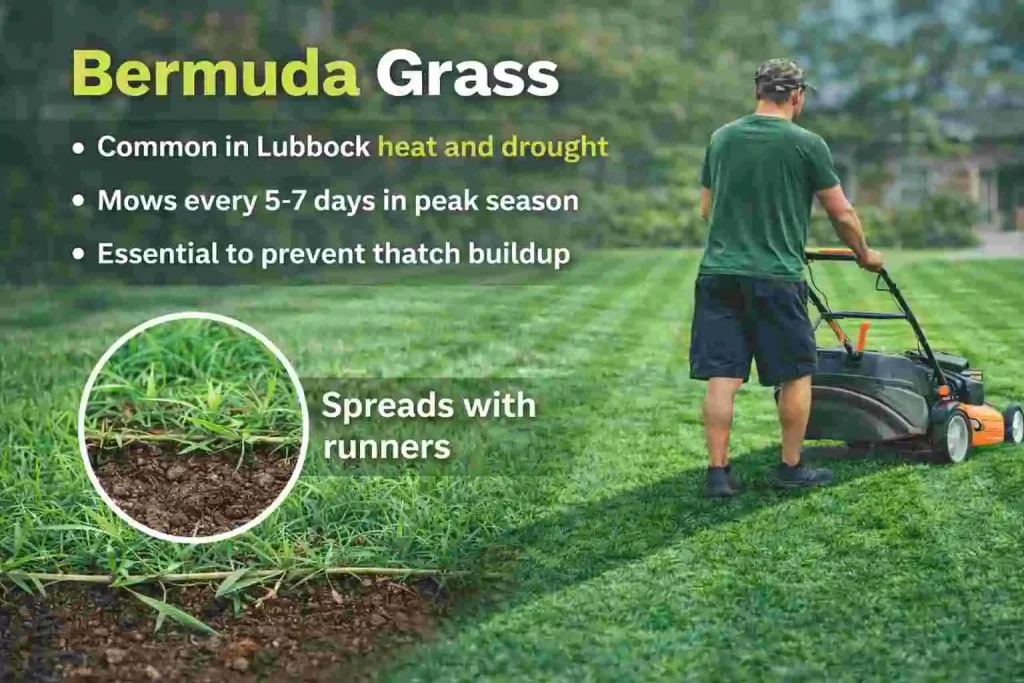
Bermuda grass spreads quickly through runners, which helps lawns recover from damage. However, frequent mowing is necessary to keep it dense and prevent thatch buildup. Maintaining the correct height improves root strength and lawn durability.
Buffalo Grass
Buffalo grass is a low-maintenance option that grows more slowly than Bermuda grass. It is highly drought-tolerant and requires less watering and mowing. Most Buffalo grass lawns need mowing every ten to fourteen days during active growth.
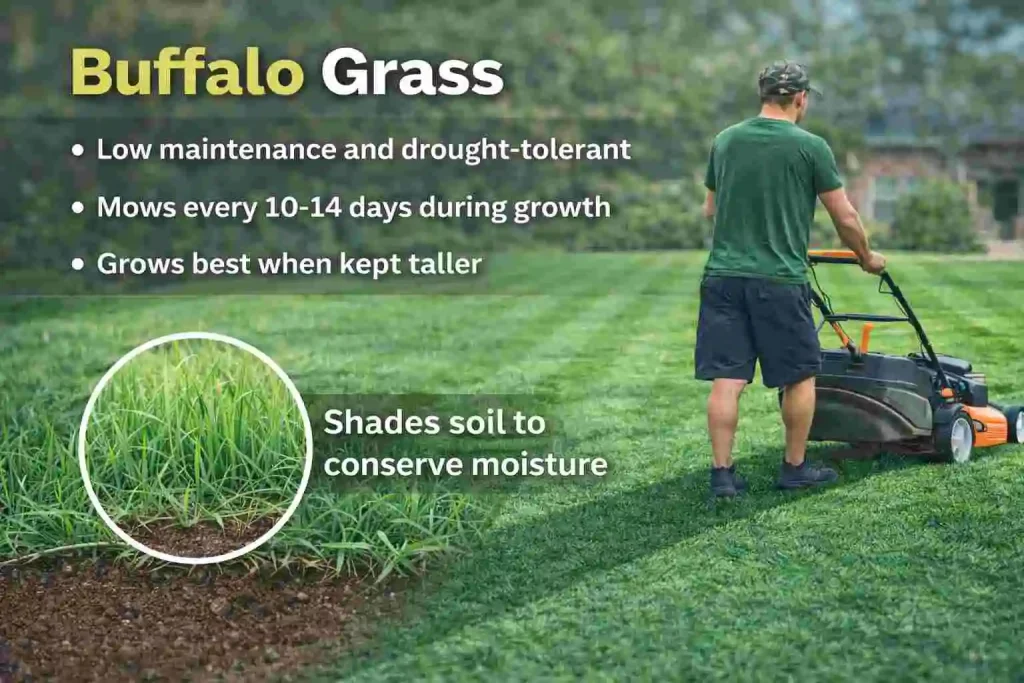
This grass grows best when kept slightly taller because it shades the soil and reduces moisture loss. Its slower growth makes it ideal for homeowners who want a natural, low-care lawn.
Spring Lawn Mowing Schedule
Spring is when lawns begin active growth after winter dormancy. Soil temperatures rise, and moisture levels improve, encouraging faster blade development. During peak spring growth, lawns usually need mowing every five to seven days.
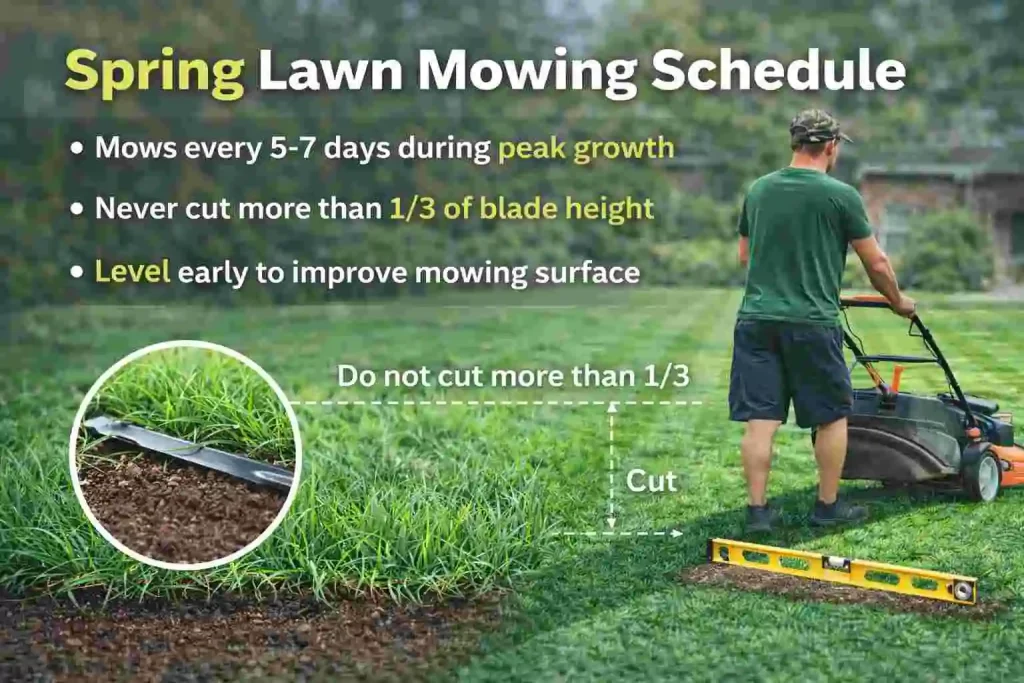
Never remove more than one-third of the blade height in a single cut. Sharp mower blades are important because they prevent tearing and reduce the risk of disease. Early Lawn Levelling can also help maintain an even mowing surface and improve cut quality.
Summer Lawn Mowing Frequency
Summer heat in West Texas slows growth and increases stress on turfgrass. High temperatures and dry wind reduce soil moisture and weaken grass recovery. Mowing every seven to ten days is usually enough during extreme heat.
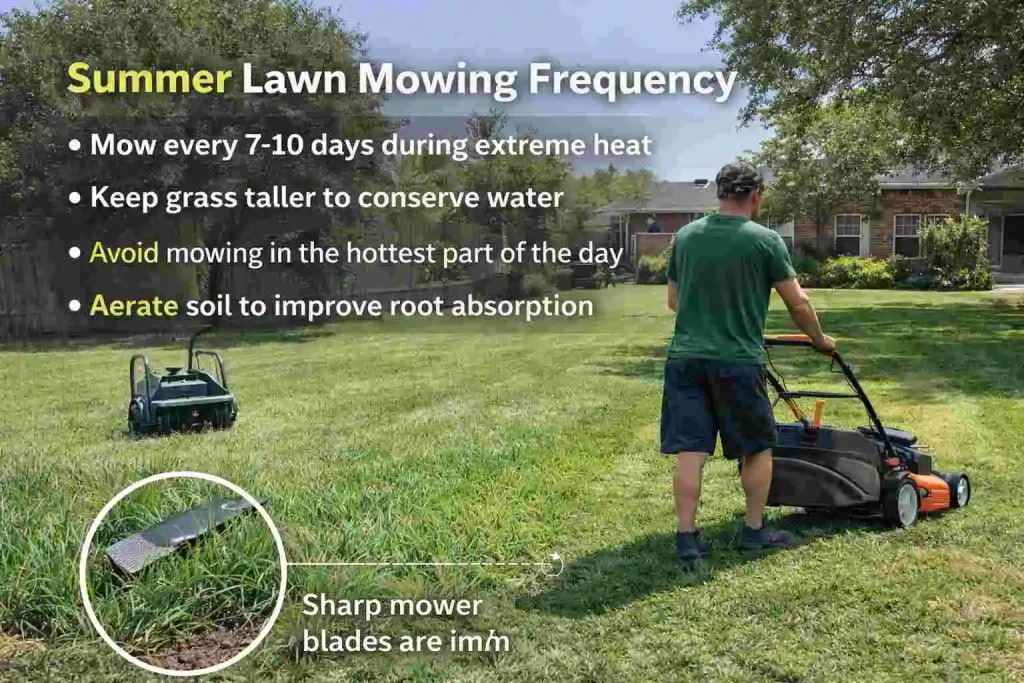
Keeping grass slightly taller helps shade the soil and reduce water evaporation. Avoid mowing during the hottest part of the day because heat stress can damage grass blades. Seasonal Lawn Aeration improves soil airflow and helps roots absorb water more efficiently.
Fall Lawn Mowing Schedule
Fall is a transition period when growth gradually slows. Proper mowing during this time helps lawns prepare for winter dormancy and store energy in the roots. Most lawns need mowing every ten to fourteen days during the fall. Keep grass at a moderate height to protect soil while preventing matting.
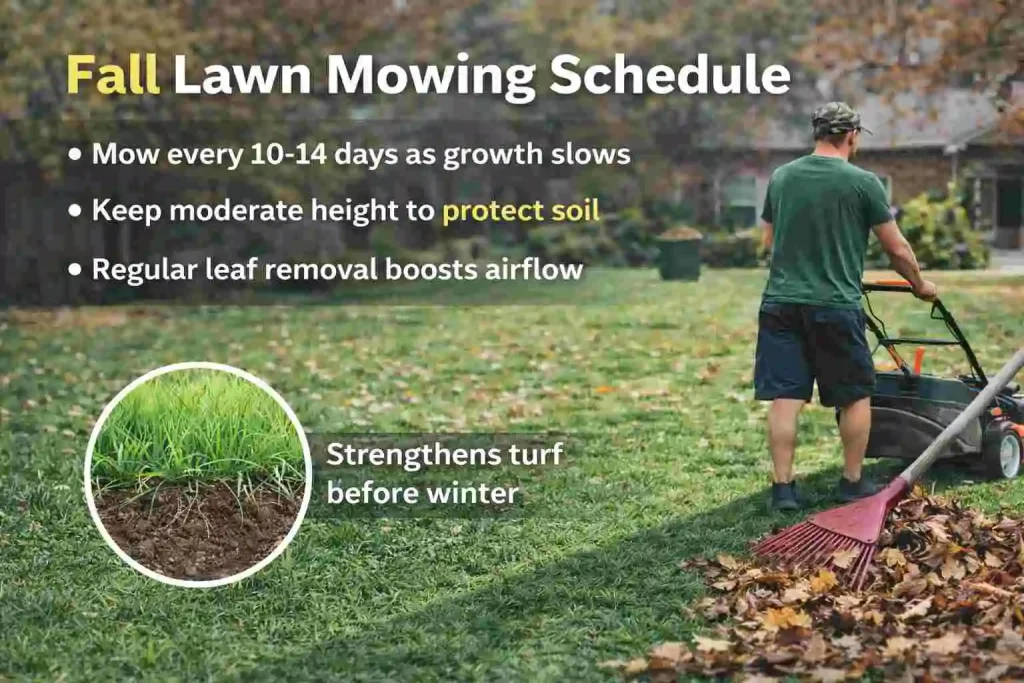
Removing leaves regularly prevents fungal issues and improves airflow. Proper fall mowing strengthens turf for the next growing season.
Winter Lawn Mowing Needs
Grass growth almost stops during winter in Lubbock. Most lawns enter dormancy and require little maintenance.
Mowing is rarely needed unless warm weather causes temporary growth. Avoid heavy traffic on dormant grass, as it can damage crowns and compact the soil. Keeping mower blades sharp ensures a clean cut if mowing becomes necessary.
Best Mowing Height for Lubbock Lawns
Maintaining the correct mowing height is just as important as timing. Different grasses perform best at specific heights that protect roots and retain moisture.
Bermuda grass grows best between 1 and 2 inches tall. Buffalo grass prefers 2 to 3 inches of soil depth for optimal health. Proper height reduces weed competition and protects soil from direct sunlight. Professional lawn mowing services can help maintain consistent height throughout the season.
Common Lawn Mowing Mistakes to Avoid
Many lawn problems start with poor mowing habits. Understanding these mistakes helps protect turf health and prevents long-term damage.
Cutting Grass Too Short
Mowing too short weakens the root system and reduces drought tolerance. Short grass exposes soil to direct sunlight, increasing moisture loss. It also creates space for weeds to grow quickly. Always follow the one-third rule to protect turf strength.
Using Dull Mower Blades
Dull blades tear grass instead of cutting cleanly. Torn tips turn brown, making lawns look unhealthy. Damaged blades increase disease risk and slow recovery. Sharpen mower blades regularly to maintain clean cuts.
Irregular Mowing Schedule
Skipping mowing for a few weeks causes uneven growth and stress. Overgrown grass blocks sunlight from lower blades and weakens turf density. Cutting too much at once shocks the lawn. A consistent schedule keeps growth balanced and healthy.
Mowing Wet Grass
Wet grass clumps and creates uneven cuts across the lawn. Moist conditions increase the risk of fungal diseases and soil compaction. Clippings can block sunlight and airflow. Always mow when the grass is dry for the best results.
Ignoring Seasonal Growth Changes
Grass growth changes with temperature and weather patterns. Using the same schedule year-round stresses the turf. Seasonal adjustments help maintain proper height and density. Following seasonal timing improves lawn resilience.
How Mowing Fits Into Complete Lawn Care
Mowing is only one part of maintaining a healthy lawn. Fertilization, weed control, and irrigation all work together to support strong turf growth. A balanced maintenance plan improves soil health and keeps grass resilient during extreme weather.
Professional lawn care Lubbock services combine mowing with seasonal treatments to maintain consistent lawn performance. Integrated care ensures your lawn stays healthy year-round.
Final Thoughts
The ideal mowing frequency in Lubbock changes with seasons and grass growth patterns. Adjusting your schedule prevents stress and promotes deeper roots. Proper height, sharp blades, and consistent timing keep turf dense and healthy. Following a seasonal approach ensures long-term lawn success in West Texas conditions.
Don’t wait until your lawn gets stressed — schedule professional mowing service now and keep your grass healthy.