When Should You Remove a Tree vs Trim It
When Should You Remove a Tree vs Trim It
A tree in your yard can go from healthy to hazardous faster than most homeowners expect especially in West Texas.
Lubbock gets strong northers, high winds, and dry summers that put real stress on trees year after year. A tree that looked fine last spring can show up cracked, leaning, or half-dead after one bad wind event. When that happens, most people ask the same question: do I trim it, or do I take it down?
The answer depends on what’s actually wrong with the tree. This guide walks you through the clear signs for both so you can make the right call before the problem gets worse..
Tree Trimming vs Tree Removal: How Are They Different
Tree trimming means cutting back specific branches — dead ones, crossing ones, or branches growing toward your roof or power lines. The tree stays in the ground. The goal is to keep it healthy, reduce wind resistance, and remove anything that poses a risk.
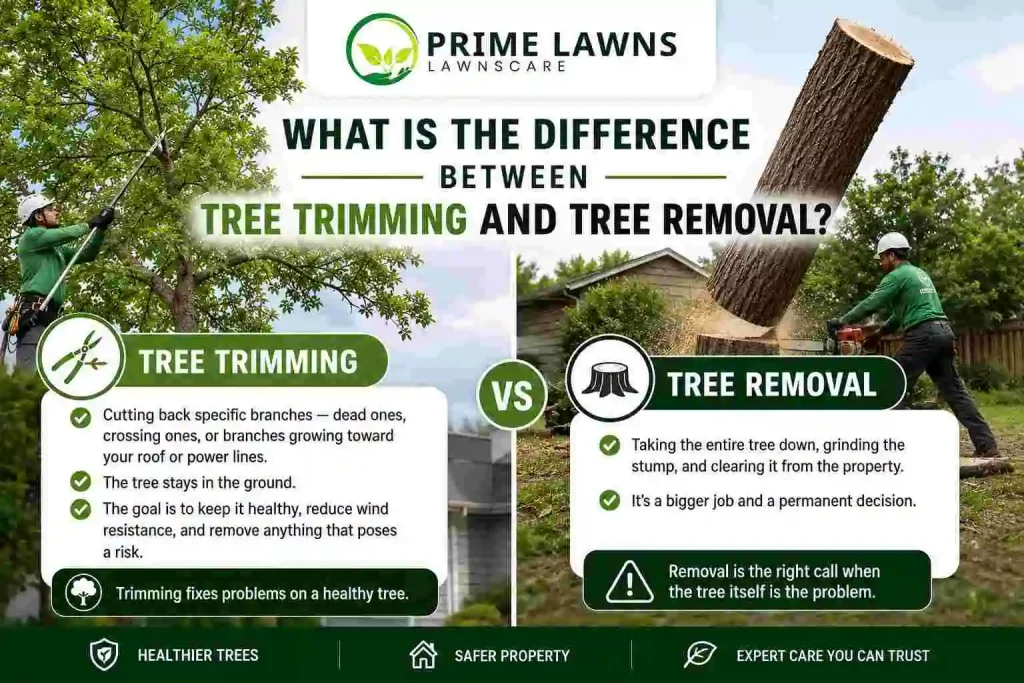
Tree removal means taking the entire tree down, grinding the stump, and clearing it from the property. It’s a bigger job and a permanent decision.
Trimming fixes problems on a healthy tree. When the tree has become the source of damage rather than just a maintenance task, taking it down is the only path forward.
When Trimming Is the Right Choice
Most tree problems in Lubbock yards don’t require removal. Trimming handles a lot more than people think if the trunk and root system are solid, the tree can almost always be saved.
Dead or Hanging Branches
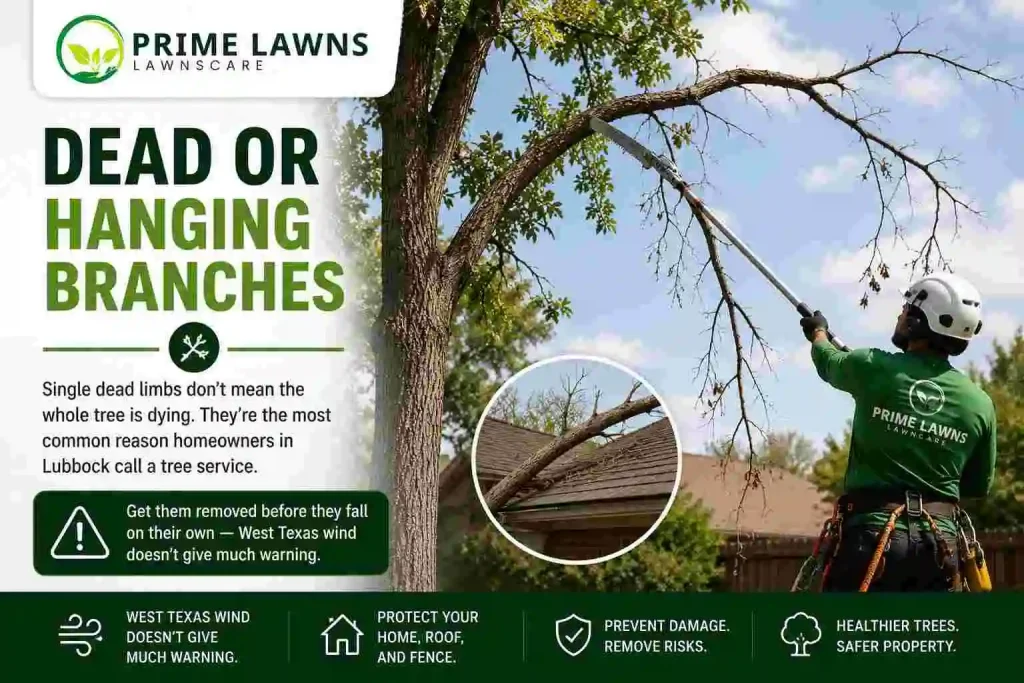
Single dead limbs don’t mean the whole tree is dying. They’re the most common reason homeowners in Lubbock call a tree service. Get them removed before they fall on their own West Texas wind doesn’t give much warning, and a hanging branch over a roof or fence is a problem waiting to happen.
Branches Near Power Lines or Your Roof
This is a safety issue, not a tree health issue. Branches growing toward power lines or over your roofline should be cut back regardless of how healthy the rest of the tree looks. Most tree services covering Lubbock, Wolfforth, and Idalou handle this type of trim on a regular basis and can clear the risk without touching the rest of the tree.
A Tree That Has Outgrown Its Space
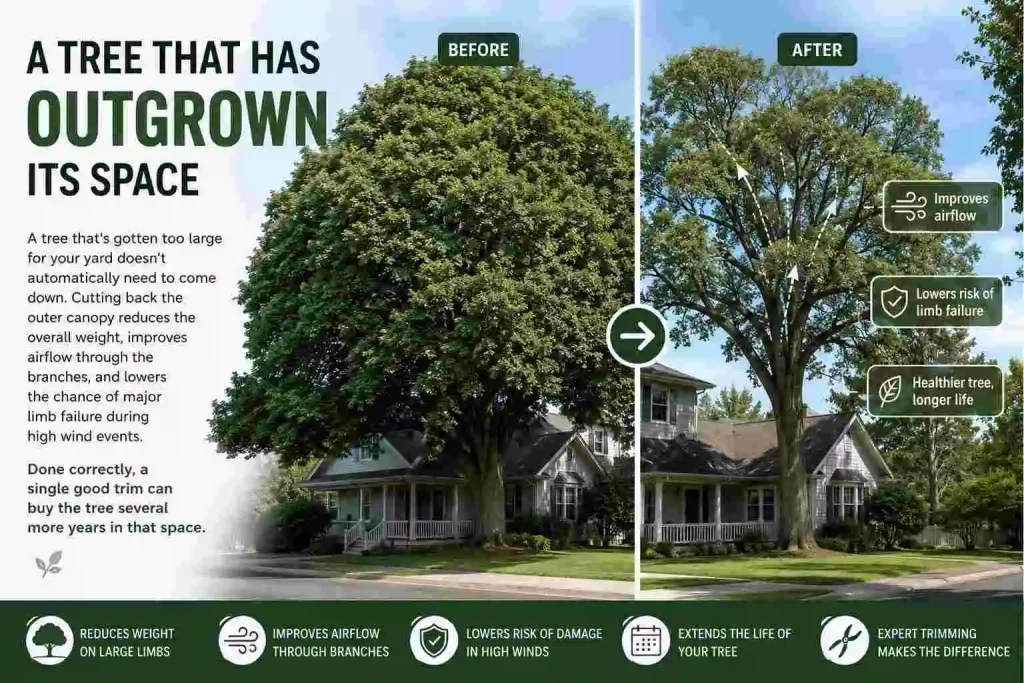
A tree that’s gotten too large for your yard doesn’t automatically need to come down. Cutting back the outer canopy reduces the overall weight, improves airflow through the branches, and lowers the chance of major limb failure during high wind events. Done correctly, a single good trim can buy the tree several more years in that space.
Localized Disease or Pest Damage
When disease or pest damage is limited to one section of the tree, trimming out the affected branches often stops the problem from spreading. The general rule is if the damage covers 25% or less of the canopy, the tree is still a good candidate for trimming. Beyond that, removal becomes the more practical conversation.
When Tree Removal Is the Only Option
Some trees are past the point where trimming helps. Keeping them standing becomes a liability.
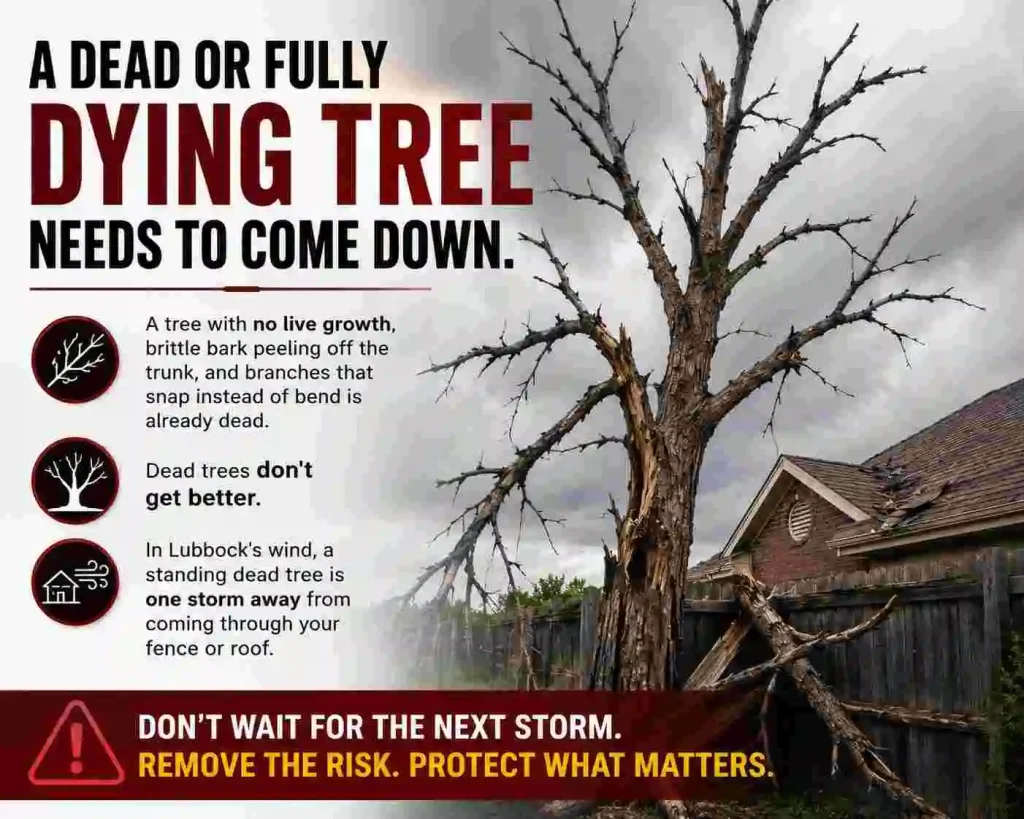
A dead or fully dying tree needs to come down.
A tree with no live growth, brittle bark peeling off the trunk, and branches that snap instead of bend is already dead. Dead trees don’t get better. In Lubbock’s wind, a standing dead tree is one storm away from coming through your fence or roof.
A tree leaning after a storm or toward your home is a removal job.
Some lean is normal and develops gradually as a tree grows. But a tree that shifted after a storm especially one where the root ball has started lifting on one side is structurally compromised. Trimming branches won’t fix a failing root system.
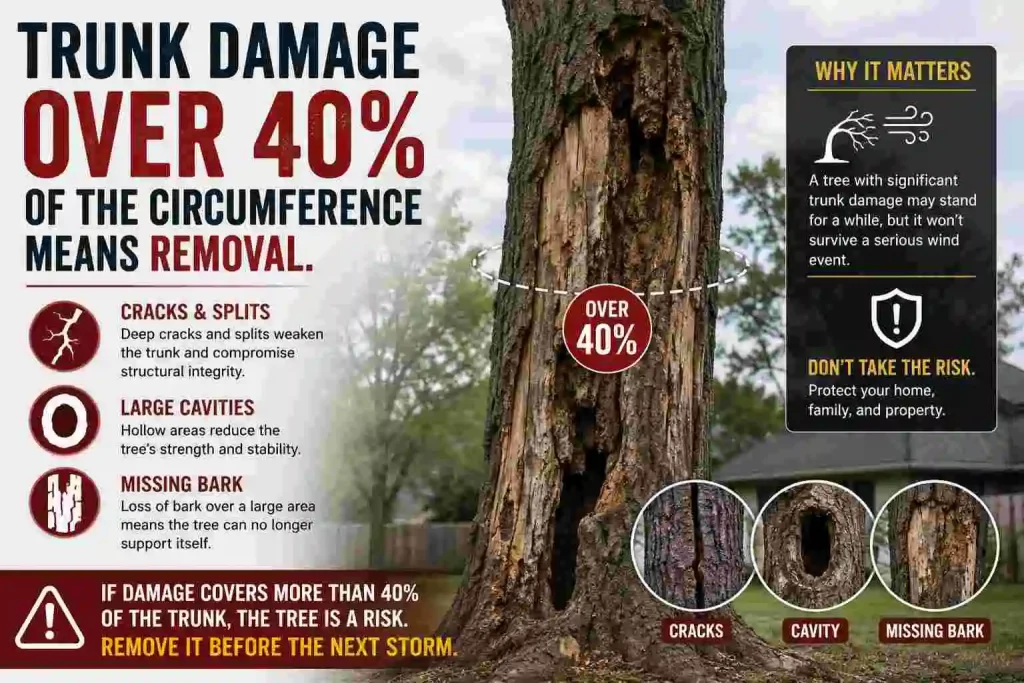
Trunk damage over 40% of the circumference means removal.
Cracks, splits, large cavities, or sections of missing bark that cover more than 40% of the trunk indicate the tree can’t support itself structurally. It may stand for a while, but it won’t survive a serious wind event.
Cotton root rot is common in Lubbock.
This fungal disease attacks the root system and works from the ground up. By the time you notice wilting and brown leaves, the roots are already severely damaged. There is no treatment for cotton root rot affected trees need to be removed before they fall.
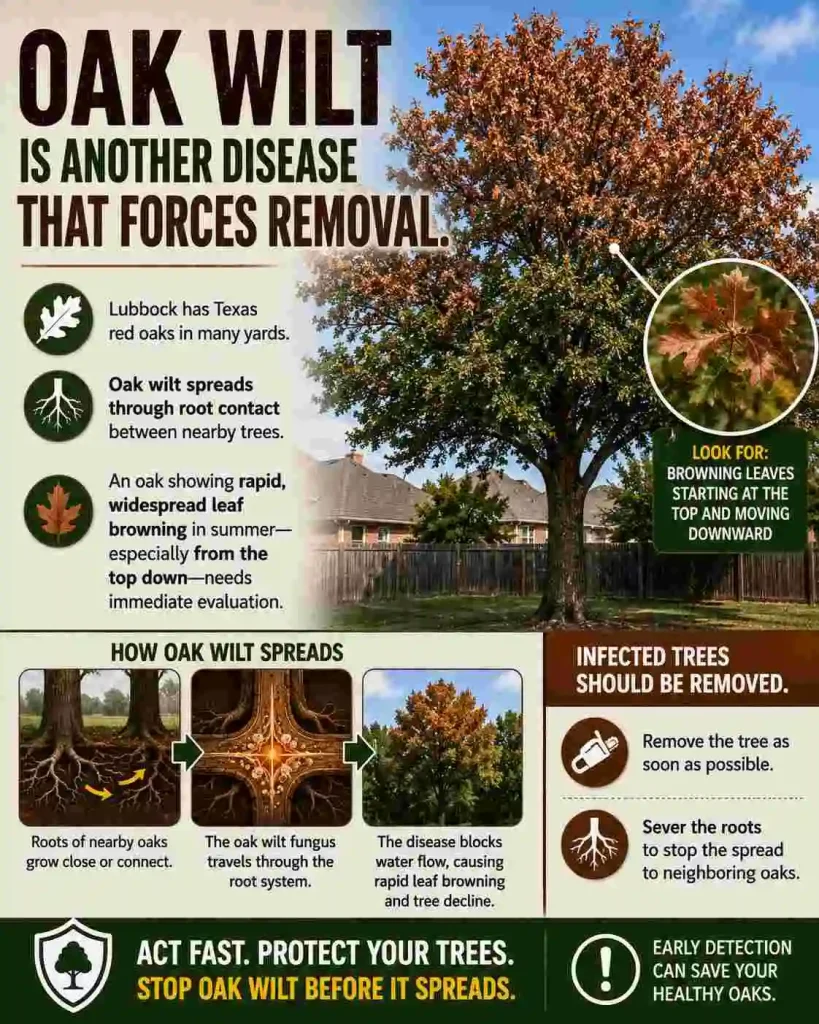
Oak wilt is another disease that forces removal.
Lubbock has Texas red oaks in many yards, and oak wilt spreads through root contact between nearby trees. An oak showing rapid, widespread leaf browning in summer especially from the top down needs immediate evaluation. Infected trees should be removed, and the roots severed to stop the spread to neighboring oaks.
When Tree Roots Start Destroying Your Property
Make a case for removal even when the tree itself is healthy. Honey mesquite trees, which are extremely common in Lubbock yards, have aggressive root systems that work into sidewalk cracks and foundation edges over time. Once root damage to a structure is confirmed, keeping the tree isn’t worth the long-term repair cost.
What Happens If You Wait Too Long
Many Lubbock homeowners put off the decision because removal feels like a bigger commitment than trimming. But waiting on a tree that should come down creates real risk.
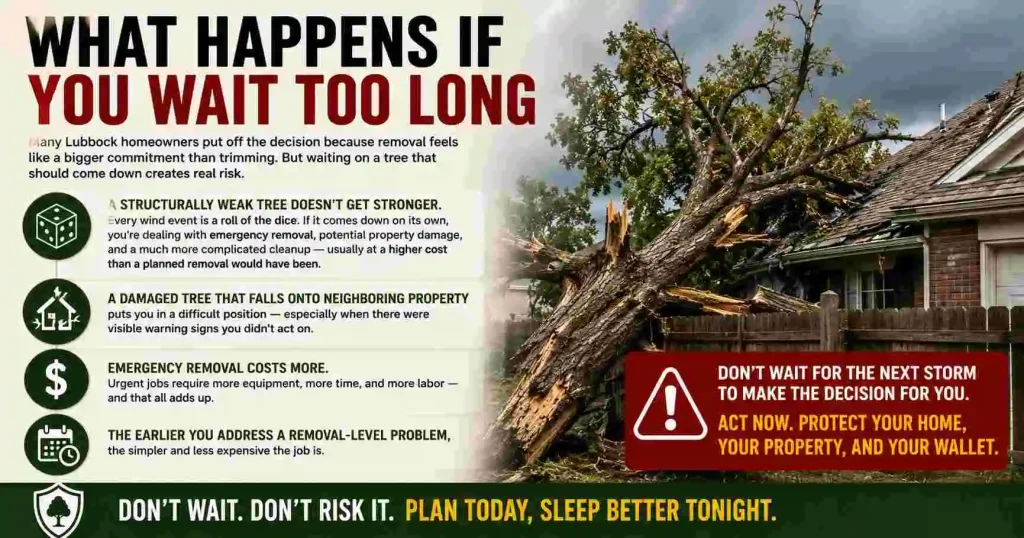
A structurally weak tree doesn’t get stronger on its own. Every wind event is a roll of the dice. If it comes down on its own, you’re dealing with emergency removal, potential property damage, and a much more complicated cleanup — usually at a higher cost than a planned removal would have been.
If a tree falls on a neighbor’s fence or vehicle and you knew it was damaged beforehand, the liability question becomes complicated fast. The earlier you address a removal-level problem, the simpler and less expensive the job is.
The 25% Rule for Lubbock Trees
In West Texas, most tree species can handle pruning throughout the year as long as no more than 25% of the canopy is removed at one time. Removing more than that in a single visit causes serious stress, especially during summer heat or when the tree is already dealing with drought.
For oaks specifically, timing matters beyond just quantity. Sap beetles stay active from February through June in West Texas — and fresh oak cuts during that window attract them directly. Those beetles carry the oak wilt fungus from infected trees to healthy ones. Keep oak trimming inside the July through January window, and seal every cut immediately with wound paint regardless of the time of year.
Fresh cuts during that window attract the beetles that spread oak wilt. If you need to trim an oak outside the safe window, have the cuts sealed immediately with a wound sealant. For honey mesquite and juniper the two most common trees in Lubbock yards late winter trimming works best. January through February gives the tree enough dormancy time to seal cuts before spring growth starts.
Trimming and Tree Removal in Wolfforth and Idalou
Homeowners in Wolfforth and Idalou deal with the same tree species, the same wind exposure, and the same soil conditions as Lubbock. Cotton root rot shows up in both areas. Wind damage after spring storms is a regular issue. The same decision rules apply.
Tree trimming in Wolfforth and tree services in Idalou follow the same seasonal guidelines — late winter for routine trimming, immediate attention for storm damage or disease, and no delays on trees that are clearly past saving.