
How Uneven Lawns Cause Water Pooling in Lubbock
After heavy rain, does water sit in your yard for hours? That’s not normal. That’s a drainage problem, and an uneven lawn is usually the cause.
In Lubbock, water pooling is more common than most homeowners realize. The combination of clay soil, flat terrain, and temperature swings creates the perfect conditions for standing water. Left untreated, it damages your grass, your soil, and eventually your foundation.
At Prime Lawn, we fix this problem every season. Here’s what you need to know.

What Causes an Uneven Lawn in the First Place
Lubbock lawns don’t start unevenly; they get that way over time. Heavy foot traffic compresses certain spots. Tree roots push soil upward in patches. Clay soil swells after rain and pulls back tight when it dries out. This constant movement creates dips and high spots across your yard.
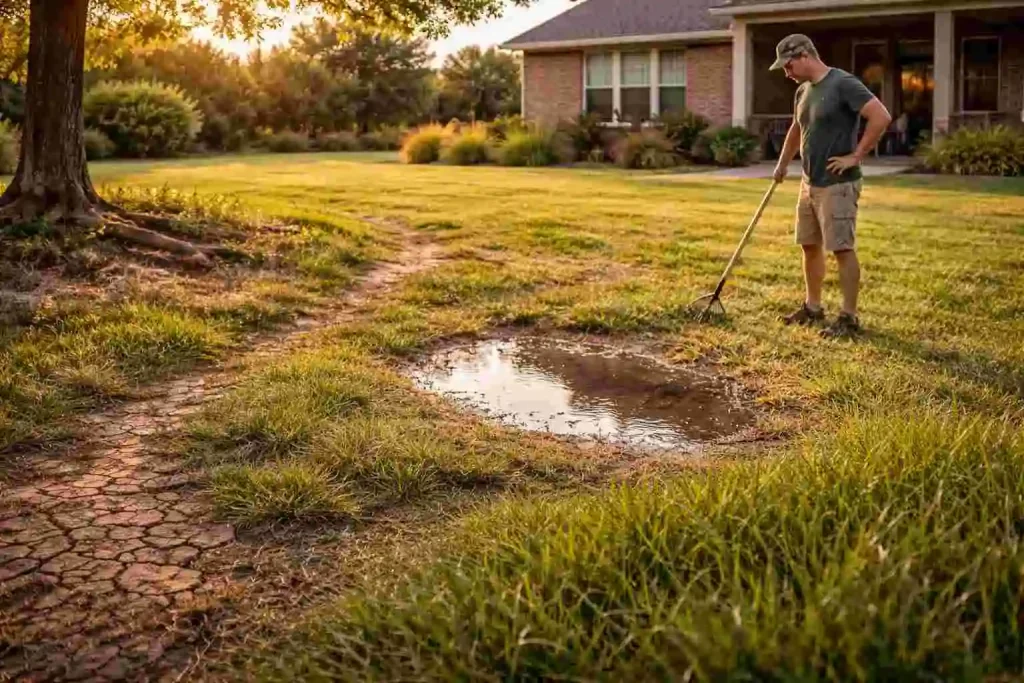
Freeze-and-thaw cycles in winter make it worse. Soil shifts underground. The surface above follows. Most homeowners don’t notice it until water starts pooling after rain.
Why Water Pooling Is a Serious Problem
Standing water looks harmless. It’s not water sitting on grass for more than 24 hours suffocates roots. Oxygen can’t reach the root zone. Grass weakens fast, and bare patches appear where turf died from lack of air. Fungal disease moves in quickly. Wet, warm conditions are exactly what lawn fungus needs to spread. One pooling spot can infect a large area within days.
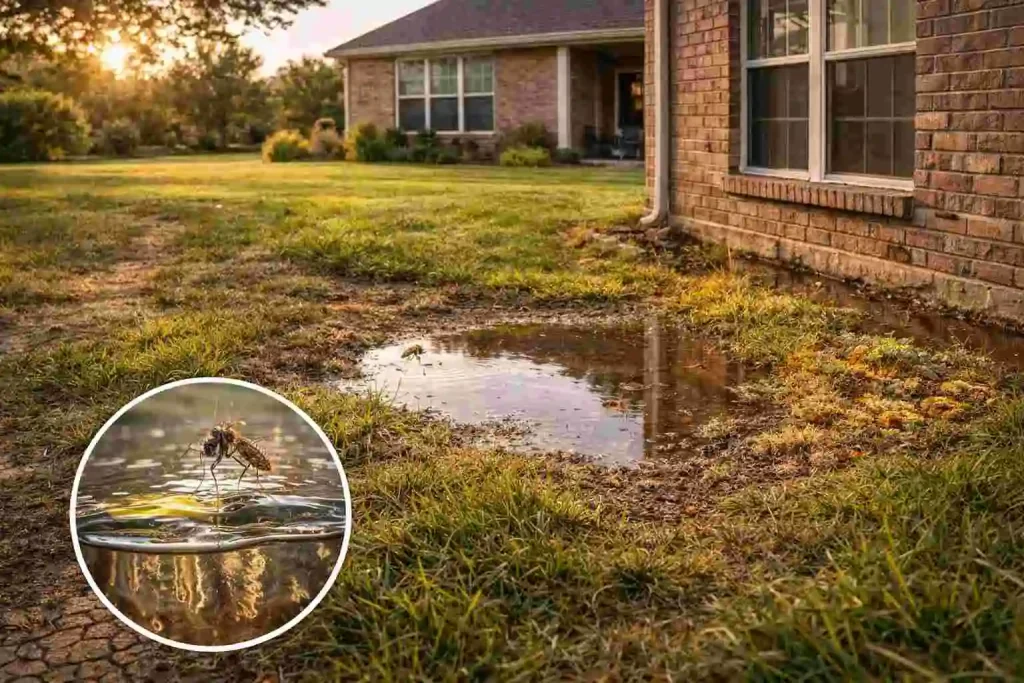
Mosquitoes breed in standing water. Within 48 hours, a drainage problem becomes a pest problem fast. Worst of all, water pooling near your home’s foundation causes long-term structural damage. That’s an expensive repair no homeowner wants.
How Lubbock’s Clay Soil Makes It Worse
This is the part most people miss. Lubbock sits on dense clay soil. Clay doesn’t absorb water quickly. When rain hits compacted clay, water has nowhere to go. It collects in every low spot across your yard.
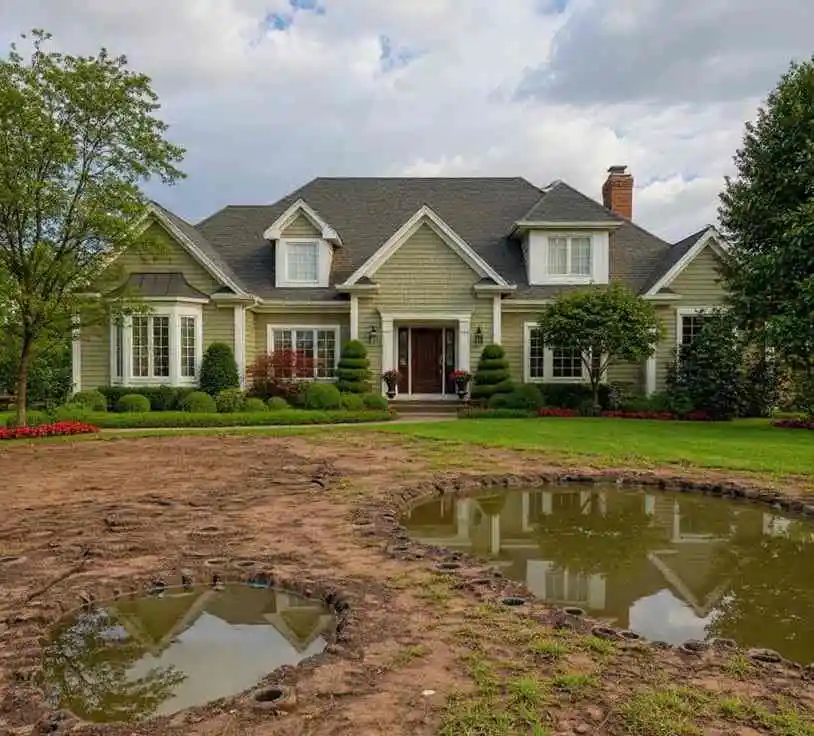
An uneven lawn combined with clay soil is a recipe for chronic pooling. Leveling the surface alone isn’t always enough. The soil underneath needs attention too. Aeration breaks up clay compaction It creates pathways for water to move down through the soil rather than sit on the surface. Leveling and aeration together solve the problem properly.
Wolfforth Homeowners Face the Same Issue
Yards in Wolfforth deal with identical soil conditions. The same clay base. The same drainage challenges after heavy rain.Uneven spots develop faster in areas with newer construction. Soil settles unevenly after building work. Low spots appear within the first two to three years.
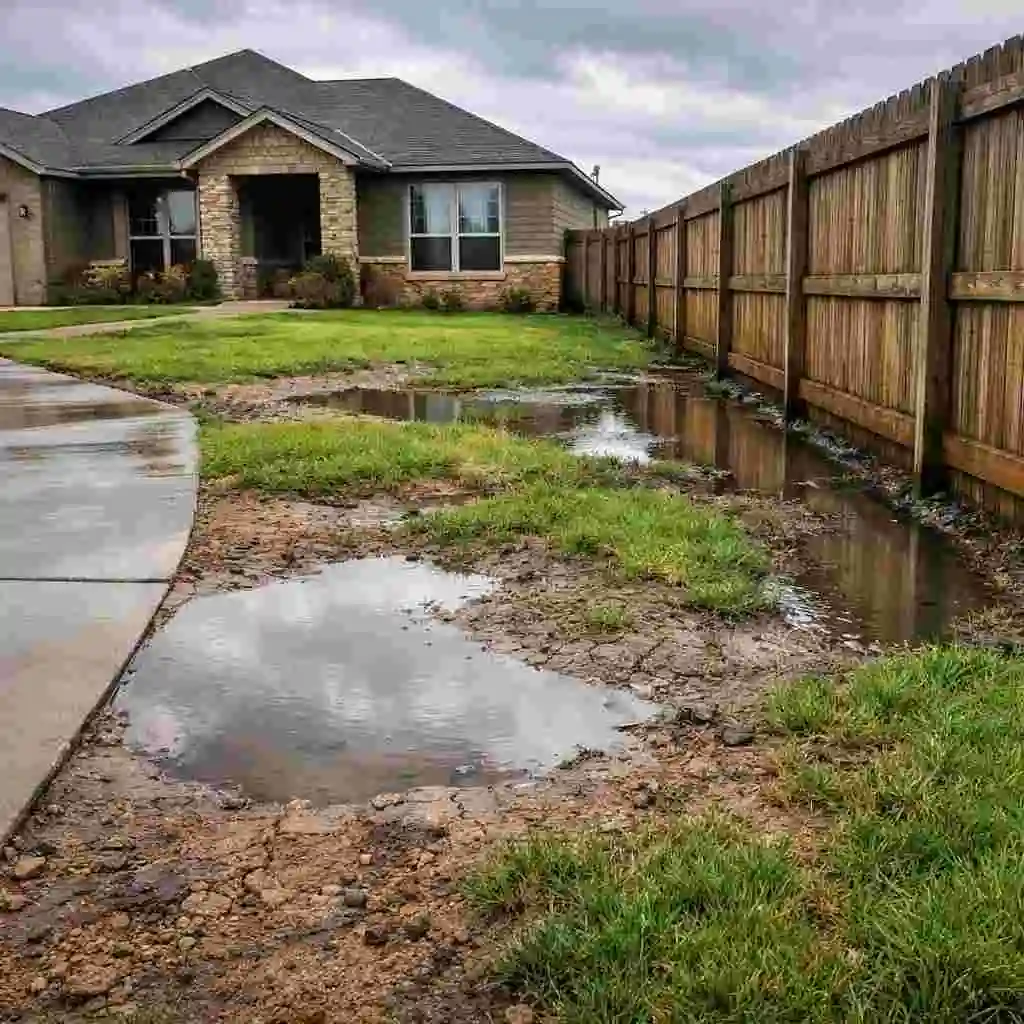
Homeowners in Wolfforth often contact Prime Lawn after noticing standing water near driveways and fence lines, two of the most common pooling spots. Early leveling saves significant lawn repair costs down the road.
The Right Fix: Lawn Leveling and Grading
Fixing an uneven lawn requires more than filling low spots with dirt.Proper lawn leveling uses a mix of sand, topsoil, and compost. This topdressing mix fills dips without smothering existing grass. The surface is graded so water flows away from the home naturally.
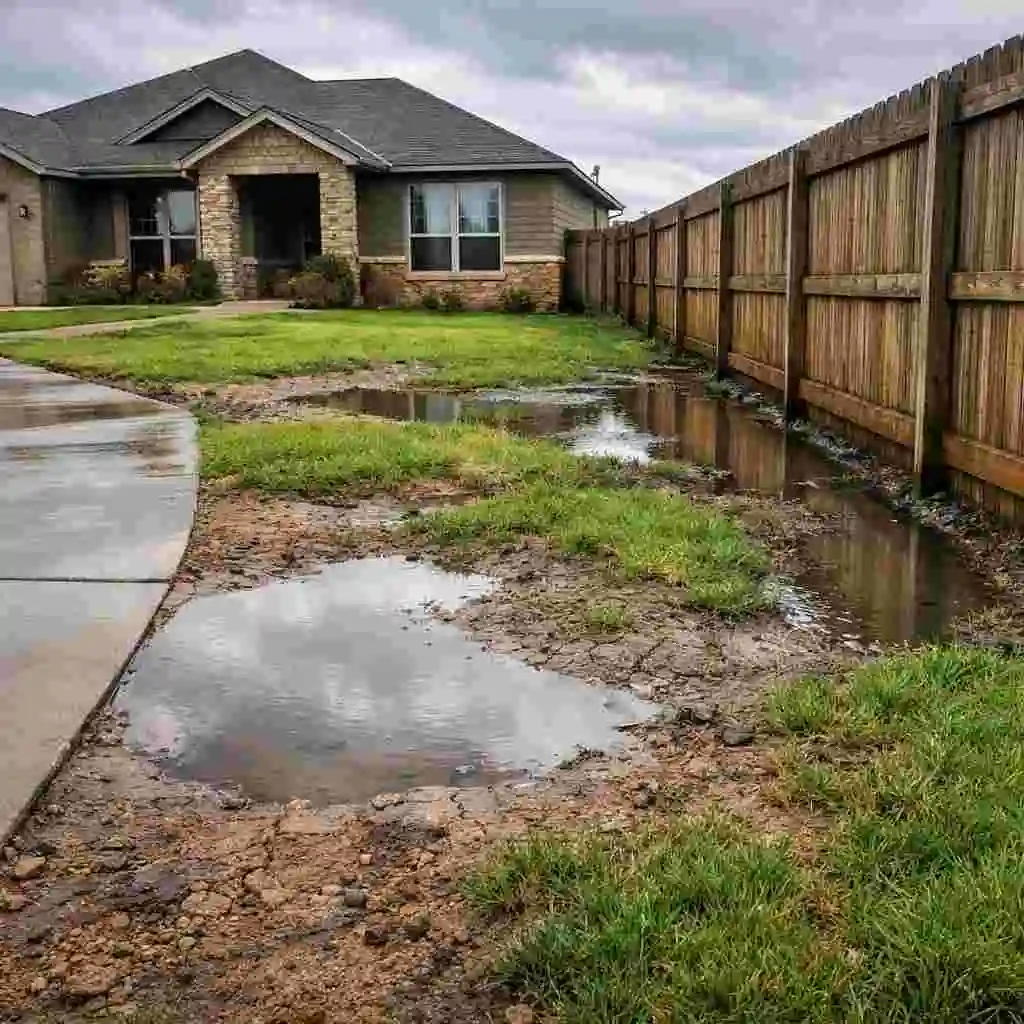
For severe cases, grading the entire yard slope is necessary. Water should always move away from the foundation not toward it. Done correctly, leveling lasts for years. Done incorrectly, the same low spots return after the next heavy rain.
Idalou Yards Need Slope Correction Too
Flat yards are common in Idalou. Flat means the water has no natural direction in which to flow.Without a slight slope away from the home, every rain event pushes water toward the foundation or into low patches in the lawn. Over time, those patches get deeper. The pooling gets worse.
Homeowners in Idalou benefit from a proper yard assessment before the rainy season hits. Identifying problem spots early prevents turf damage and costly repairs later.
Shallowater Lawns and Wind Erosion Damage
Shallowater deals with an additional factor — wind.Strong West Texas winds erode topsoil unevenly. Soil blows away from exposed areas and deposits in others. This creates an uneven surface over time even on lawns that started perfectly flat.
After a windy season, Shallowater homeowners often notice new dips and bumps that weren’t there before. Regular topdressing keeps the surface level and prevents pooling from developing.Catching erosion damage early costs far less than full lawn leveling after years of neglect.
Don’t Let Standing Water Destroy Your Lawn
Water pooling is not a minor inconvenience. It kills grass, spreads disease, attracts pests, and threatens your foundation.Lubbock’s clay soil and flat terrain put every yard at risk. Prime Lawn knows exactly what it takes to fix drainage problems in this region.Prime Lawn levels, aerates, and grades yards across Lubbock, Wolfforth, Idalou, and Shallowater. We find the problem fast and fix it right.
Call Prime Lawn today for a free yard assessment. Stop letting rain damage the lawn you’ve worked hard to maintain.