Common Lawn Care Myths in West Texas
West Texas is not like the rest of the country. The soil is different. The heat is different. The wind is relentless. Most lawn care advice online was not written for this region. Homeowners follow it anyway. Then wonder why their yard looks worse every season.
At Prime Lawn, we work in this climate daily. Here’s the truth behind the myths costing Lubbock homeowners the most.

More Water Means a Healthier Lawn
West Texas summers push homeowners to water constantly. It feels responsible. It’s actually harmful.Overwatering drowns the grass roots. It cuts off the oxygen supply. Fungal diseases spread quickly in wet, hot conditions. Bermuda grass needs deep, infrequent watering two to three times per week is enough. Water early morning between 4 a.m. and 10 a.m.
Give the soil time to breathe before the next cycle more water does not mean more green. It means weaker roots and higher water bills.
West Texas Soil Doesn’t Need Any Preparation
Many homeowners assume dry soil just needs more water. That’s wrong Lubbock sits on heavy clay soil. Clay compacts tightly over time. Water pools on top and never reaches the roots roots stay shallow grass stays weak. No amount of watering fixes compacted clay aeration does It breaks up the hard layer.
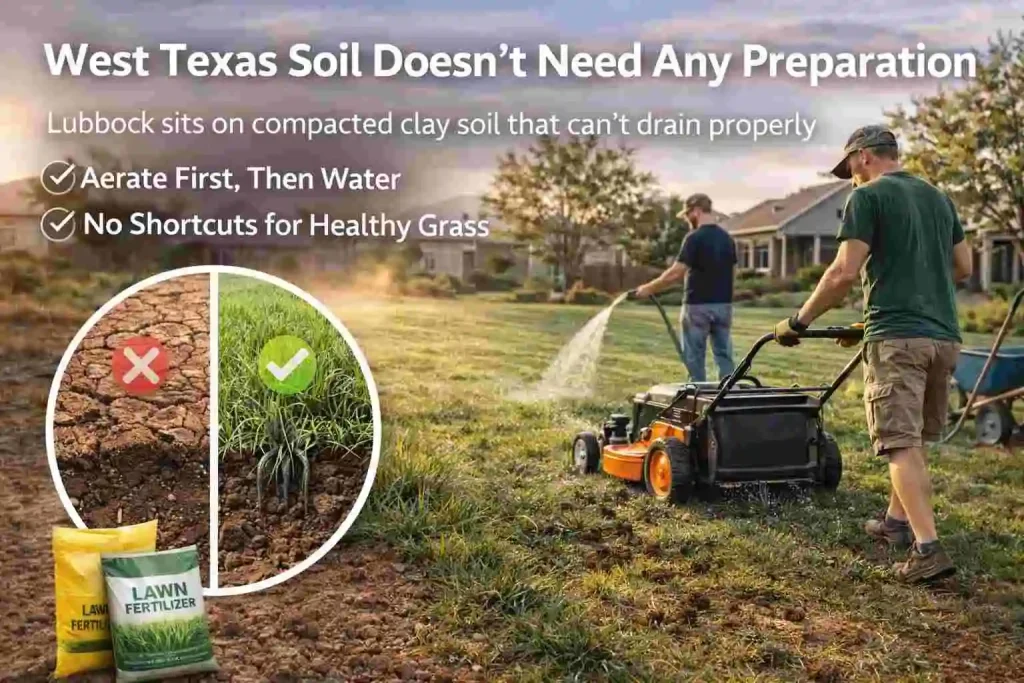
Water and nutrients reach the root zone where they belong skipping soil prep means every other lawn care effort works at half strength.
You Only Need to Fertilize Once a Year
One fertilizer application in spring feels like enough. It’s not — especially in West Texas.Clay soil here locks up nutrients quickly. Hot summers burn through whatever is stored in the ground. By midsummer, your lawn is running on empty.Fertilize from April through September. Every 6 to 8 weeks works well for Bermuda and Buffalo grass.

Use the right formula for warm-season grass — not a generic all-purpose product.Homeowners in Wolfforth deal with the same nutrient-draining clay soil. Consistent feeding through the season is what keeps lawns thick and green out here.
Short Cuts Damage Your Lawn More Than You Think
Scalping the lawn feels efficient It causes serious damage removing too much of the grass blade at once puts the plant under stress. It loses the ability to produce energy. Weeds fill in the gaps quickly because bare soil gets direct sunlight.Bermuda grass performs best at 1.5 to 2.5 inches.
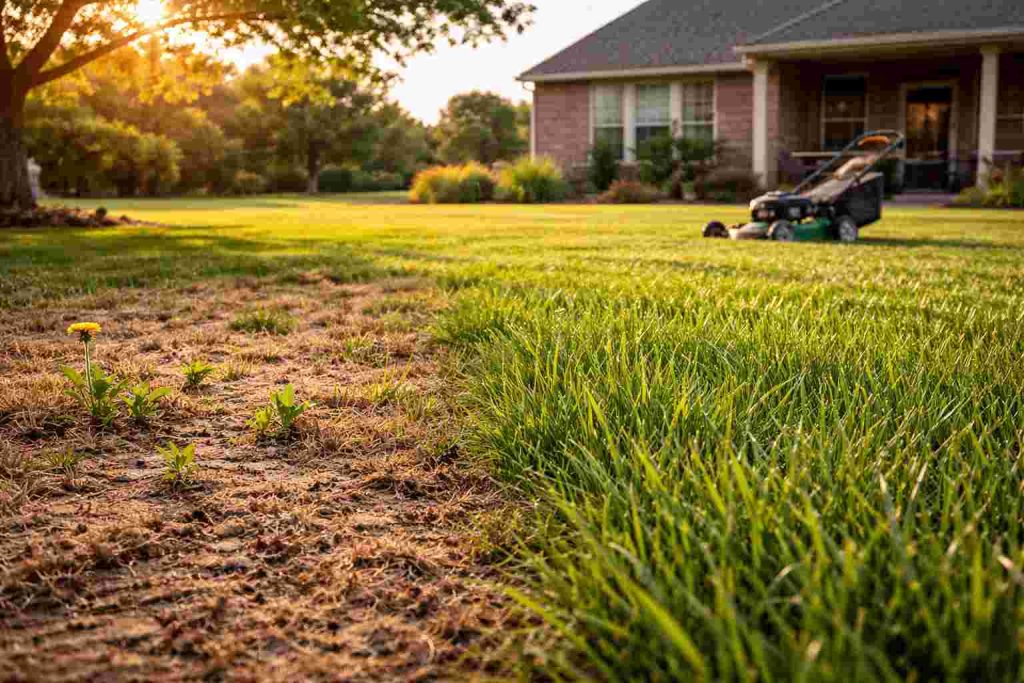
Buffalo grass does well at 2 to 3 inches keep mowing consistently. Never drop the blade too low, trying to buy yourself an extra week.Short grass in West Texas heat doesn’t recover fast. It just struggles.
Brown Grass Is Dead Grass
Brown patches send homeowners into panic mode. Nine out of ten times, the lawn is not dying Bermuda grass goes dormant in winter. It turns brown. It comes back green in spring. That’s normal and healthy.
In summer, brown spots usually point to a specific problem — chinch bugs feeding on grass blades, white grubs destroying roots underground, or fungal disease spreading in humid patches. Each cause has a different fix.
Treating the wrong problem wastes money and makes things worse. Identify the cause first.
Any Lawn Product From the Store Will Work
Walk into any hardware store and you’ll find dozens of lawn products”. Most are not formulated for West Texas conditions.
Generic fertilizers don’t account for Lubbock’s alkaline soil pH. Off-the-shelf pesticides wipe out helpful insects right alongside the damaging ones weed killers applied at the wrong temperature can severely burn Bermuda grass.
Many homeowners in Idalou contact us after store-bought treatments damaged their lawn further. Products must match your specific grass type, soil condition, and season. Getting that wrong is expensive.
Grass Clippings Smother Your Lawn
Bagging clippings after every mow wastes time and removes free nutrients short clippings from a properly maintained lawn break down within days. They return nitrogen back into the soil naturally. This is called grasscycling. It reduces fertilizer needs by up to 25 percent.
Thatch buildup comes from dead stems and root material. Not fresh clippings. If thatch is getting thick, the fix is annual aeration not bagging every week leave the clippings. Let them work for you.
Lawn Care Is the Same Year-Round in West Texas
West Texas seasons demand a different approach every few months spring is the time to aerate, apply pre-emergent weed control, and start fertilizing as soil warms up. Summer means adjusting watering schedules and watching for pest activity. Fall is when you prepare the lawn for dormancy final fertilization and overseeding if needed. Winter requires almost no input, but it’s the right time to plan for spring.
Treating every month the same is one of the biggest mistakes West Texas homeowners make. Timing changes everything out here.
Stop Following Advice Made for Someone Else’s Yard
West Texas lawns need West Texas knowledge. Generic tips from national websites don’t account for Lubbock clay, alkaline pH, summer wind, or Bermuda grass behavior.Prime Lawn was built for this region. We know the soil. We know the seasons. We know what it takes to keep a Lubbock lawn healthy all year long.
Call Prime Lawn today. Get a free lawn assessment.
Your yard deserves advice that actually works here.