
What Is Lawn Aeration and Why Lubbock Lawns Need It
What Is Lawn Aeration and Why Lubbock Lawns Need It
Your lawn may look healthy now, but summer in Lubbock can damage it fast. Brown patches, dry grass, and water sitting on the surface are often early warning signs.
Most homeowners think they need more water, but the real problem is usually under the soil. When the ground gets too hard, roots stop getting the air and water they need. Fix it early before small lawn problems turn into expensive damage.
What Is Lawn Aeration?
Lawn aeration is the process of pulling small plugs of soil out of the ground across your entire lawn. A machine called a core aerator does this. It drives hollow metal tines into the ground and pulls out cylinders of soil about 2 to 3 inches deep and half an inch wide.

Those holes stay open for a few weeks. During that time, water soaks straight down to the root zone instead of running off. Fertilizer reaches the roots instead of sitting on top of hard ground. Air enters the soil, feeding the microbes that keep grass healthy.The soil plugs left on the surface break down on their own within 1 to 2 weeks. You don’t need to rake them up.
Why Does Lubbock Soil Get Compacted So Fast?
This is the part most lawn care guides skip — and it’s the most important thing to understand if you own a lawn in Lubbock, Wolfforth, or Idalou.Lubbock sits on caliche-heavy clay soil. Caliche is a hard, chalky rock layer that forms naturally in dry climates. It sits just a few inches below the surface in most West Texas yards.
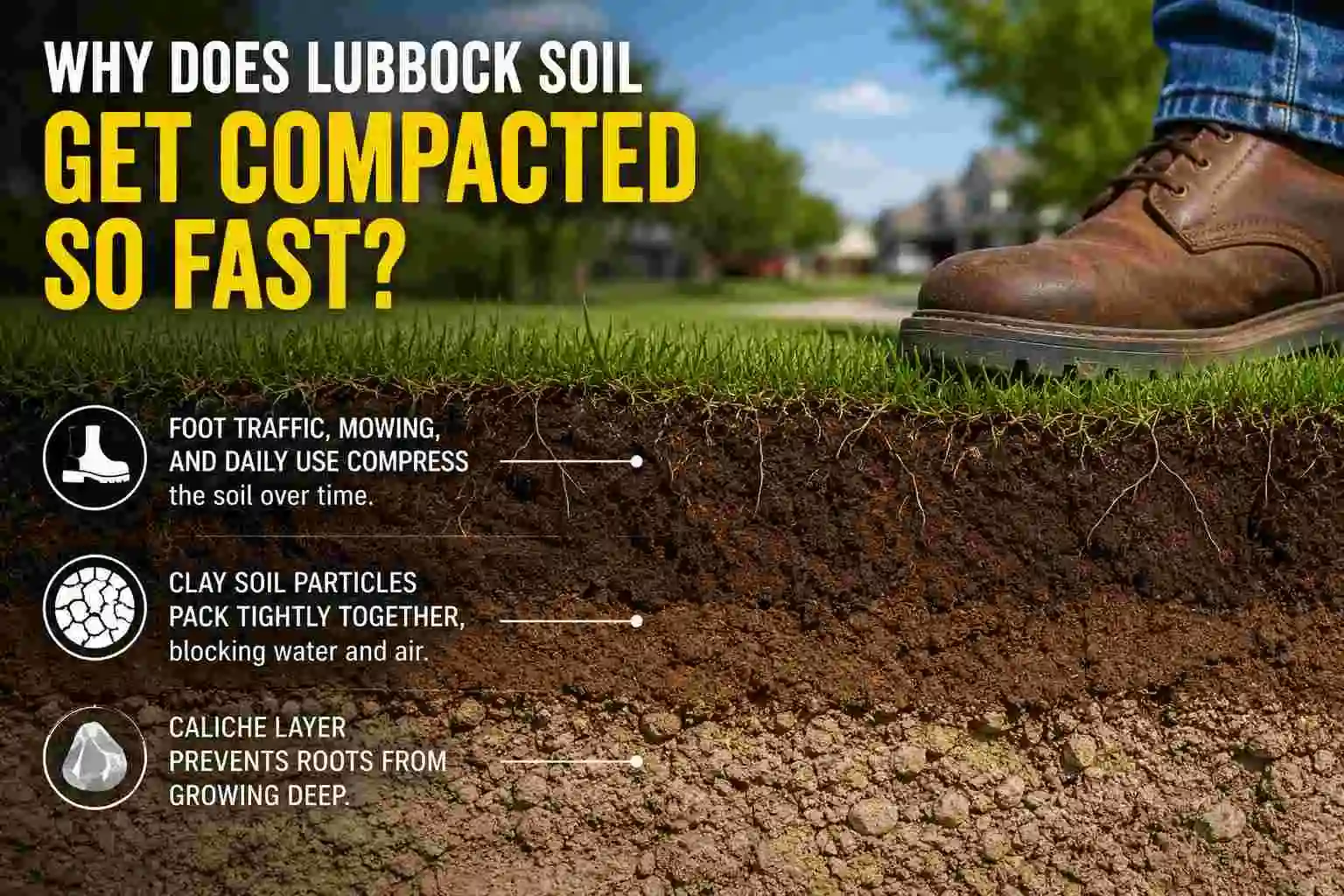
Clay soil particles pack tightly together on their own. Add caliche underneath and you have a one-two problem: water can’t drain down through clay, and roots can’t push through caliche to go deeper. The result is shallow roots sitting in soil that gets rock-hard between rain events.
On top of that, every time you mow, walk across the lawn, or park near the grass edge, you compress the soil a little more. Over a full growing season, the surface layer gets dense enough that even a hard rain barely penetrates it.
Signs Your Lawn Needs Aeration
You don’t need a soil test to tell if your lawn is compacted. These signs show up on the surface:
- Water pools or runs off after rain. If you see water sitting on the lawn or running toward the street instead of soaking in, the soil is too hard to absorb it.
- Footprints stay visible for a long time. Press your foot into the grass and step away. If the impression stays for more than 30 seconds, the soil is compacted.
- The lawn looks thin and patchy in summer. When soil gets too hard, roots have nowhere to go and stay near the surface. Shallow roots can’t pull enough water or nutrients to keep the grass thick and green through Lubbock’s heat.
- Fertilizer doesn’t seem to work. You apply fertilizer and see little to no improvement. This usually means it’s sitting on top of hard ground and not reaching the roots where it’s needed.
- The screwdriver test fails. Push a regular screwdriver into the soil. If you can’t push it in 2 to 3 inches without serious effort, the soil is too compacted for healthy root growth.
Core Aeration vs Spike Aeration: Which Does Lubbock Need?
There are two types of aerators. Understanding the difference matters before you rent equipment or hire a service.
Core aeration (also called plug aeration) pulls actual plugs of soil out of the ground. This is the right method for Lubbock. Removing soil creates real open space for water and air to move through.
Spike aeration uses solid tines that poke holes without removing any soil. The problem with spike aeration in clay soil is that pushing a solid spike in actually compresses the soil around the hole, making compaction worse in the surrounding area. It’s better than nothing in loose soil but the wrong tool for West Texas clay.
For any lawn in Lubbock, Wolfforth, or Idalou, core aeration is the only method worth using.
When Is the Best Time to Aerate Your Lawn in Lubbock?
Timing aeration correctly matters as much as doing it at all.
The best window for Lubbock is late May through early June.
This is when Bermuda grass the most common lawn grass in this area is actively growing and at its strongest. Aeration creates stress on the lawn because you’re pulling chunks out of it. You want the grass to be growing fast enough to fill those holes and recover within 3 to 4 weeks.

Never aerate dormant or stressed grass.
If you aerate in winter when Bermuda is brown and dormant, the holes won’t close and the lawn can take months to recover. Same goes for aerating during extreme summer heat — if the grass is already heat-stressed, the additional stress from aeration can set it back badly.
Aerate before fertilizing.
If you’re planning your second fertilizer application of the season in June or July, aerate first. Fertilizer dropped into fresh aeration holes goes straight to the root zone. It’s significantly more effective than fertilizing compacted soil.

How Often Should You Aerate Bermuda Grass in Lubbock?
For most Lubbock lawns, once per year is enough. Aerate every spring-to-early-summer and you’ll keep compaction from building up season to season.Lawns that get heavy foot traffic like yards with kids, dogs, or regular outdoor gatherings compact faster and may need aeration twice a year.
If your lawn is near a high-traffic area or sits on particularly dense caliche, a second aeration in early fall (late August to early September) can help.For lawns in Wolfforth and Idalou, the same schedule applies. The soil conditions are nearly identical to Lubbock, so lawn maintenance in Wolfforth and lawn care in Idalou follow the same aeration calendar.
Should You Aerate Before or After Overseeding in Lubbock?
Aerate first, then overseed. some Lubbock homeowners overseed their Bermuda lawn with ryegrass in fall to keep it green through winter. If that’s your plan, aerate in early September before the soil cools down. Then spread ryegrass seed immediately after.
The seed falls into the aeration holes and makes direct contact with the soil instead of sitting on top of dense thatch. Germination rates are noticeably better when you overseed into freshly aerated ground.
DIY Lawn Aeration vs Hiring a Pro in Lubbock
Both options work. Here’s the honest breakdown:
DIY aeration
Itmeans renting a core aerator from a local equipment rental shop. Rental runs around $60 to $90 for a half day in the Lubbock area. Core aerators are heavy machines — most weigh over 200 pounds — and they’re harder to maneuver than they look, especially around landscaping edges and tight corners. If your yard is straightforward and flat, DIY is a reasonable option.
Professional aeration
It costs more upfront but saves you the equipment hassle and the physical work. A professional lawn maintenance service in Lubbock will also know how to handle caliche-heavy areas and can pair the aeration visit with fertilization, weed control, or overseeding in one trip.
For most homeowners in Lubbock, Wolfforth, and Idalou, the time saved and the correct technique make professional aeration worth the cost.
Lawn Aeration Cost in Lubbock, TX
Aeration pricing in Lubbock depends on lawn size. For a standard residential lot, professional core aeration typically runs between $75 and $150. Larger properties or lots with difficult access cost more. DIY rental brings the cost down to $60 to $90 for equipment plus your time and effort.
When comparing quotes from lawn care services, make sure the service is core aeration, not spike aeration. Some budget services use spike aerators because the equipment is cheaper. In Lubbock clay soil, that won’t solve your compaction problem.
What to Do After Lawn Aeration
The work doesn’t stop when the aerator finishes.
- Leave the soil plugs on the lawn. They break down organic matter and return it to the soil. They’ll be gone on their own within 1 to 2 weeks.
- Fertilize within a few days. This is the best time all year to fertilize because the holes carry nutrients straight to the roots.
- Water deeply right after aerating. Moisture helps the lawn recover faster and softens the remaining soil so roots can push into the newly opened spaces.
- Avoid heavy foot traffic for 2 to 3 weeks. Give the grass time to fill in the holes before putting stress back on the lawn.
Lawn Aeration Calendar for Lubbock, Wolfforth, and Idalou
| Time of Year | Action |
| Late May to Early June | Core aerate Bermuda grass, fertilize after |
| Early September (optional) | Second aeration if overseeding with ryegrass |
| Winter | No aeration — grass is dormant |
| After aeration | Water deeply, fertilize, limit foot traffic |